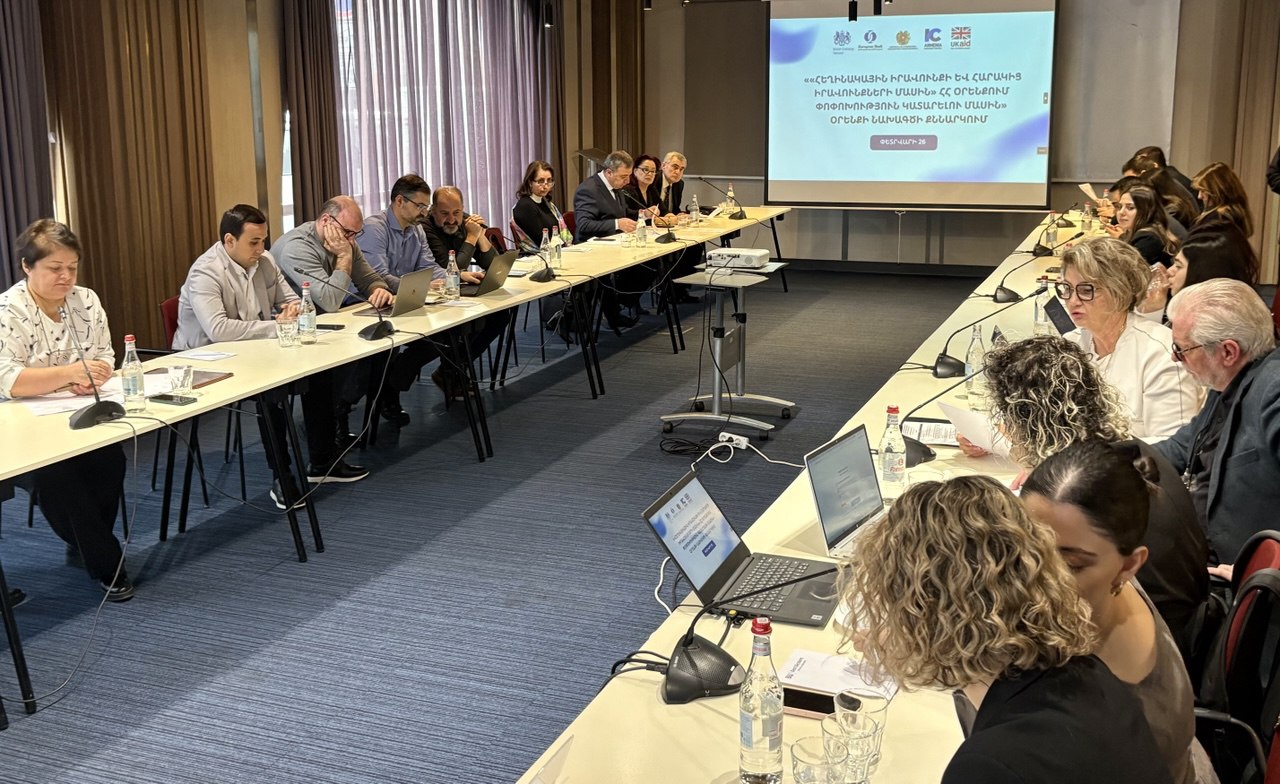
Discussion Held on the New Draft Law of the Republic of Armenia “On Copyright and Related Rights”
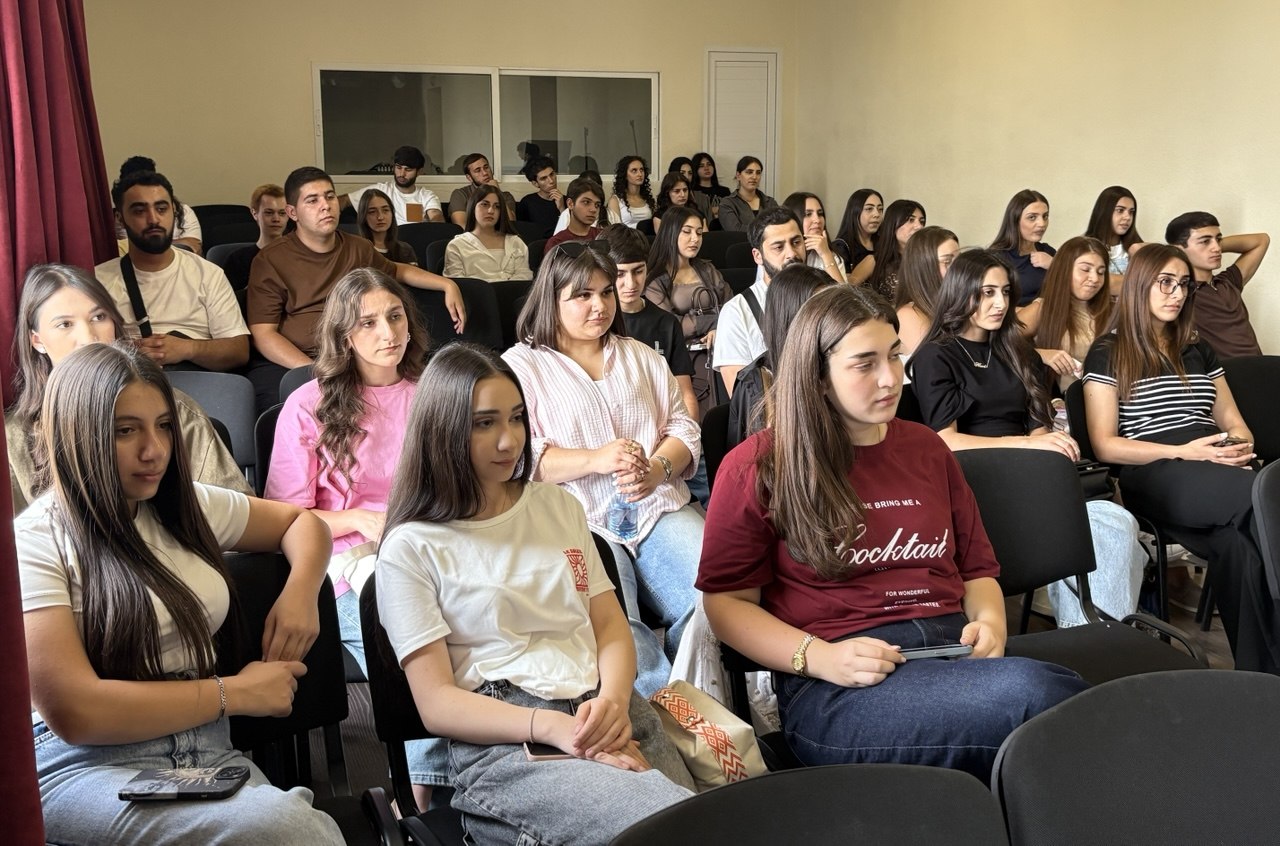
During the workshop, the participants examined and discussed various conceptual approaches reflected in the draft legislation, including the proposed legal framework for rights collective management and state accreditation, mechanisms for enforcing liability in cases of rights infringement, and other key regulatory provisions.
Particular emphasis was placed on the importance of engaging creative unions, non-governmental organizations, representatives of the creative and intellectual community, and business stakeholders in the legislative process. The discussion also addressed the potential impact of the proposed law on the business environment and other sectors, as well as the significance of conducting public hearings within the National Assembly.
The workshop was attended by representatives of ARMAUTHOR CMO, the collective management organization for copyright and related rights, who presented their proposals and observations regarding the draft law. In their remarks, the CMO representatives emphasized the importance of adopting legislation that is fully aligned with international standards and best practices in the field of copyright and related rights.
At the conclusion of the workshop, participants agreed that all proposals, comments, and observations concerning the draft law should be submitted to the Intellectual Property Office of the Ministry of Economy of the Republic of Armenia no later than 15 March.
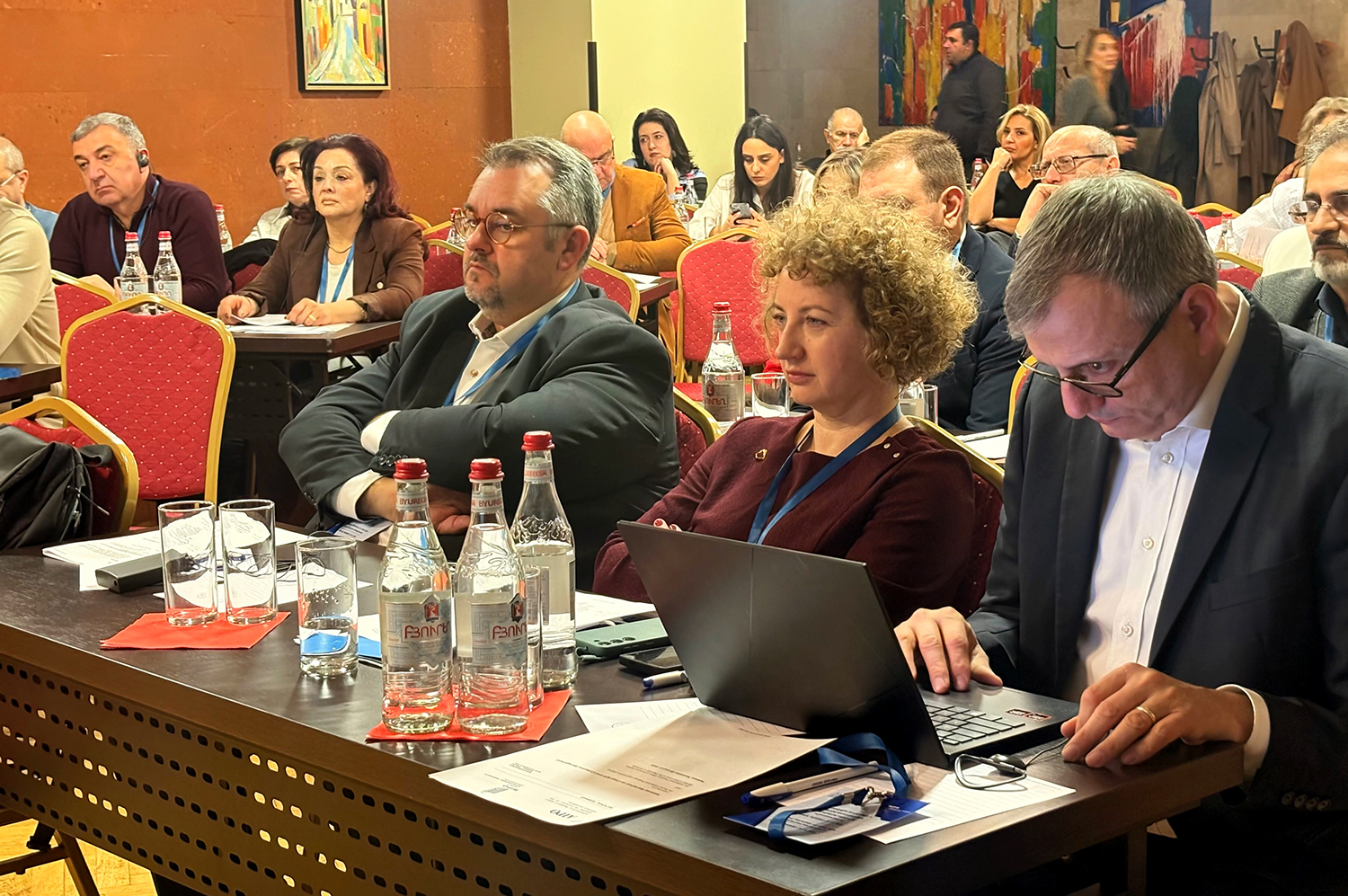
National Workshop on Copyright and Collective Rights Management in Yerevan
Official speeches, presentations, and exchanges of views were delivered by Anushik Avetyan, Deputy Minister of Economy of the Republic of Armenia; Kristine Hambaryan, Head of the Intellectual Property Office of the Ministry of Economy of the Republic of Armenia; Davit Banuchyan, Director of the “Armenian Film Foundation”; Miyuki Monroye, Legal and Program Affairs Specialist at the Copyright Management Division of WIPO; Mitko Chatalbashev, Regional Director of the International Confederation of Societies of Authors and Composers (CISAC); Anna Misevich, Head of the International Relations Department of the “ZAiKS” organization; Andras Zinger, Executive Director of the “Artisjus” organization; and Marine Avetisyan, General Director of the ARMAUTHOR organization․
Emphasizing the critical importance of collective management for the effective development of intellectual property, Marine Avetisyan noted that one of the still unresolved issues for the Republic of Armenia is the absence of a strategy and corresponding policy concept in the field of intellectual property, including copyright and related rights. Only with the existence of such a framework, she stressed, will it be possible to establish a program of measures and actions, along with an appropriate implementation timeline, in order to carry out predictable and expected reforms.
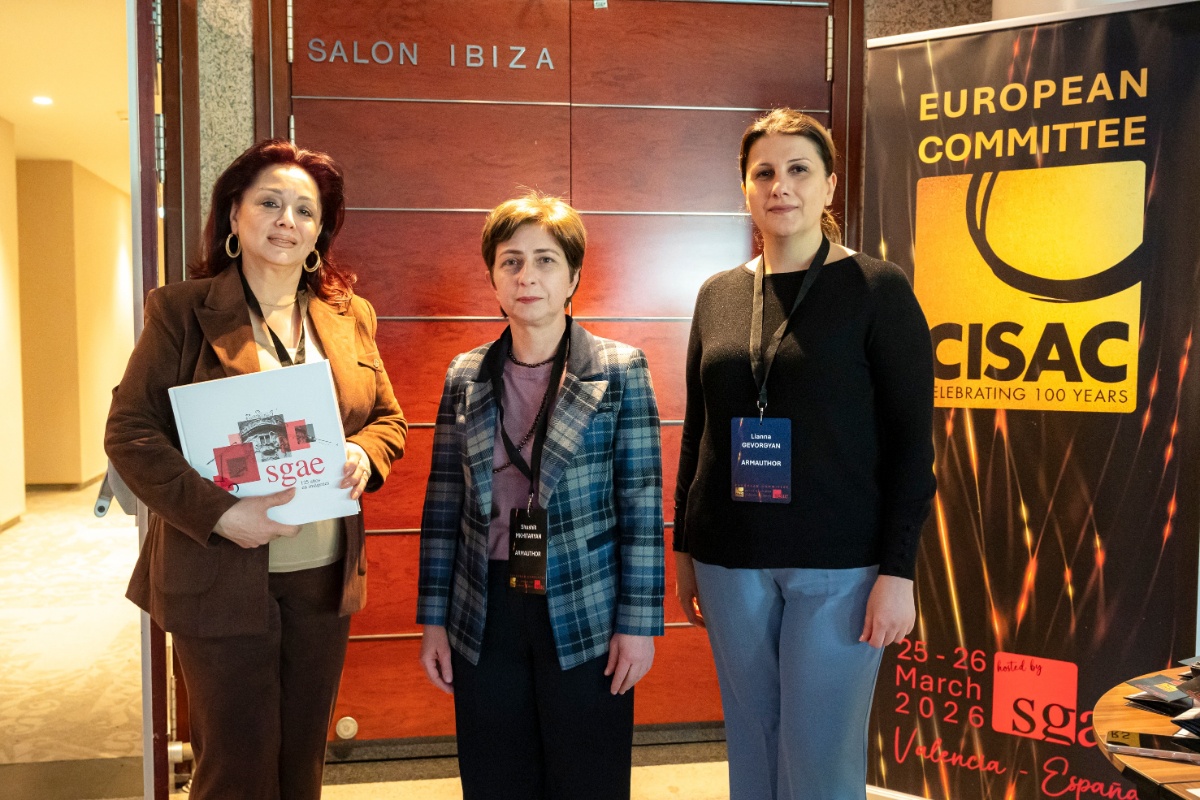
CISAC European Committee Meeting: Challenges of Artificial Intelligence Discussed at the CISAC Conference
Kingdom of Spain Minister of Culture, Ernest Urtasun was among the honorable guests of the meeting.
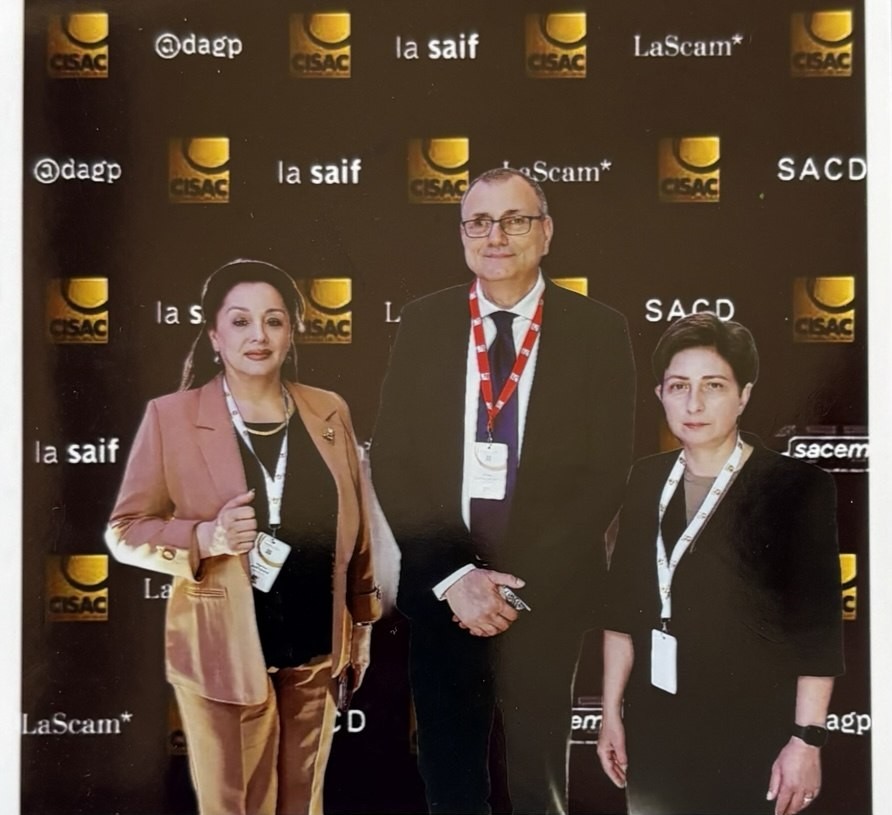
The meeting brought together over 150 representatives of collective management organizations from across Europe, as well as participants from the United States, Japan, Canada, Mexico, and Armenia.
The Republic of Armenia was represented at the meeting by a delegation from ARMAUTHOR, CISAC full member, headed by the Organization’s General Director, Marine Avetisyan.
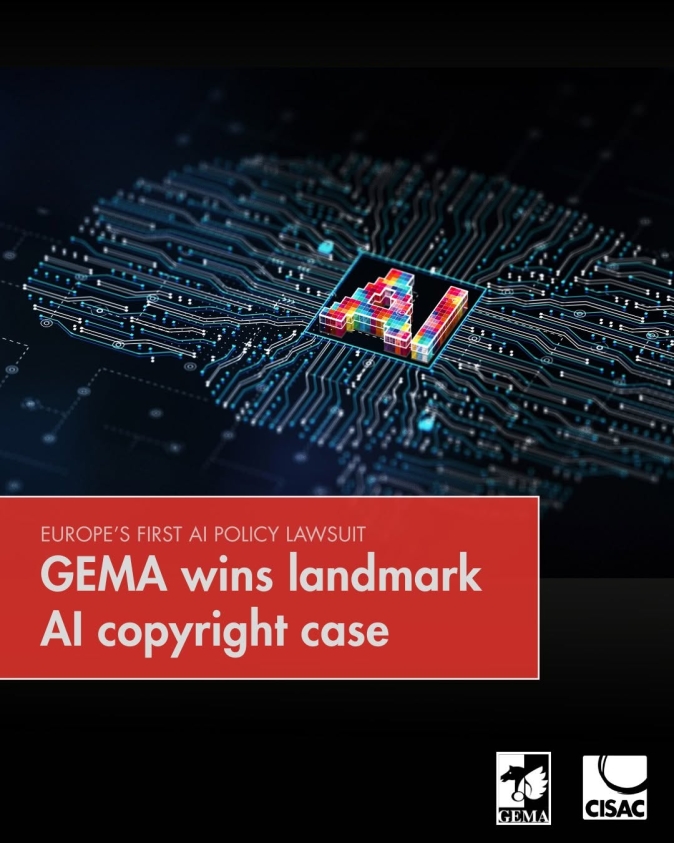
The meeting focused primarily on the impact of artificial intelligence on the creative industries and the challenges which collective management organizations in Europe are facing.
During the discussions participants emphasized that artificial intelligence systems are trained on copyrighted works, including literary texts, visual content, and musical creations. They noted that the large-scale use of protected works without transparency, authorization, or fair remuneration to rightholders raises serious concerns and is incompatible with the fundamental principles of copyright protection.
In his closing remarks, Spain’s Minister of Culture, Ernest Urtasun, addressed the risks associated with artificial intelligence and called upon organizations to promote a framework that fully respects the rights of creators. He stressed that artificial intelligence cannot replace human creativity; rather, it relies directly on creative works and the contributions of authors and artists.
News
All news 11/09/2026
 31/07/2026
 15/06/2026
 06/06/2026






Frequently Asked Questions
-
Who Is an Author and What Are an Author’s Rights?
An author is a natural person who has created a work.
Copyright consists of the author's exclusive moral rights and exclusive economic rights in relation to their work.
According to Article 12 of the Republic of Armenia Law On Copyright and Related Rights, an author's moral rights protect the intellectual and personal connection between the author and the work.
The author is entitled to the following moral rights:
- Right of authorship – the right to be recognized as the author of the work.
- Right to a name – the right to use the work under the author's real name, a pseudonym, or anonymously, or to authorize such use.
- Right to integrity and reputation – the right to protect the work from distortion, alteration, or any other act that may harm the author's reputation or dignity.
- Right of publication – the right to publish the work for the first time in any form or to authorize another person to do so.
- Right of withdrawal – the right to withdraw a previously granted authorization for publication if the work no longer reflects the author's convictions and its publication may negatively affect the author's reputation, provided that any damages (including lost profits) caused to persons entitled to use the work are compensated. If the work has already been published, the author must publicly announce its withdrawal and may remove previously distributed copies from circulation at their own expense. This right does not apply to computer programs, audiovisual works, databases, or works created in the course of employment, unless otherwise provided by agreement between the author and the employer.
Moral rights are inalienable and non-transferable and are protected indefinitely, except for the right of withdrawal, which exists only during the author's lifetime.
According to Article 13 of the RA Law On Copyright and Related Rights, economic rights protect the author's financial interests by granting the exclusive right to authorize or prohibit the use of the work or its copies.
The author has the exclusive right to use the work in any form or manner and to authorize or prohibit third parties from using it, including:
- Reproduction of the work (reproduction right);
- Distribution of the work (distribution right);
- Rental of the original or copies of the work (rental right);
- Lending of the original or copies of the work (lending right);
- Translation of the work (translation right);
- Adaptation, arrangement, illustration, modification, or other transformation of the work (adaptation right);
- Communication of the work to the public (right of communication to the public);
- Public performance of the work (public performance right);
- Public display of the work (public display right);
- Broadcasting of the work (broadcasting right);
- Simultaneous or subsequent rebroadcasting of the work (rebroadcasting right);
- Transmission of the work by cable or similar means (cable transmission right);
- Any other form of use not prohibited by the legislation of the Republic of Armenia.
The author also has the right to prohibit the importation of copies of the work made without their authorization.
Except in cases provided by law, the author is entitled to receive royalties for every use of the work. Any agreement waiving the author's right to remuneration is void.
The amount and procedure for payment of royalties are determined by an agreement concluded between:
- The author and the user of the work;
- A collective management organization and users of the work;
- The holder of exclusive economic rights and users.
The minimum royalty rates for public performances, broadcasting, reproduction through sound recordings, rental, and industrial reproduction of works of decorative and applied art are established by the Government of the Republic of Armenia.
The rights to rent or lend the original or copies of a work belong to the author regardless of ownership of those copies. However, these rights do not apply to computer programs that are not themselves the principal object of rental or that are incorporated into a machine or product and cannot normally be reproduced or copied during use.
Once the original or copies of a lawfully published work have been placed into commercial circulation through sale or another transfer of ownership, their further distribution may take place without the author's authorization or payment of royalties, except in cases provided for by law.
-
Are Ideas Protected by Copyright?
According to Article 4 of the Law “On Copyright and Related Rights”,
1. The following are not protected by copyright:
a) works of folklore and folk art;
b) information about daily news, current events, and facts;
c) official documents, including legal acts, agreements, and their official translations;
d) official symbols and insignia (flags, coats of arms, decorations, currency symbols);
e) political speeches and speeches delivered during judicial proceedings;
f) results obtained through technical means without human creative activity.
2. Copyright does not extend to scientific discoveries, ideas, principles, methods, procedures, viewpoints, systems, protocols, scientific theories, mathematical formulas, statistical diagrams, or rules of games, even if they are expressed, described, disclosed, or explained in works.
-
Origin of Copyright
According to Article 9 of the RA Law “On Copyright and Related Rights”,
1. Copyright in a work emanates from the fact of the creation of the work. A work shall be deemed created if it is expressed in any objective form that allows it to be perceived and does not depend on the official certification of that right, registration of the work, or the performance of any other act.
2. The holder of exclusive economic rights (the author or another person holding such rights in accordance with the procedure prescribed by Law) may, for the purpose of notifying others of copyright protection, use a copyright notice, which shall be placed on the original or on each copy of the work and shall consist of:
a) the Latin letter “C” enclosed in a circle ©;
b) the name or designation of the holder of the exclusive economic rights;
c) the year of the first publication of the work.
-
Term of Protection of the Author’s Economic Rights
According to Article 37 of the RA Law “On Copyright and Related Rights”,
1. The author's economic rights shall be protected during the author's lifetime and shall continue to be protected for 70 years after the author's death.
2. The economic rights in a work created in co-authorship shall be protected during the lifetimes of the co-authors and shall continue to be protected for 70 years after the death of the last surviving co-author.
3. In the case of pseudonymous or anonymous works, the author's economic rights shall arise from the moment the work is lawfully made available to the public and shall be protected for 70 years. If, within that period, the identity of the author of the pseudonymous or anonymous work is disclosed, the terms specified in paragraph 1 of this Article shall apply.
4. The term of protection of economic rights in collective works shall be calculated in accordance with the procedure set out in paragraph 3 of this Article.
5. If a work is published in parts (volumes, installments, series, episodes, supplements, etc.), and if the term of protection of the economic rights is calculated from the moment the work is lawfully made available to the public, the term of protection shall be calculated separately for each part.
6. The economic rights in audiovisual works shall continue to be protected for 70 years after the death of the last surviving author among the following contributors: the director, screenwriter, dialogue author, author of music specially created for the work, and director of photography (cinematographer).
7. Upon expiration of the term of protection of the economic rights, the work shall enter the public domain. Any person may freely use a work that has entered the public domain without paying copyright remuneration, provided that the author's rights to their name, authorship, reputation, and dignity are respected.
8. The terms established by this Article shall be calculated from January 1 of the year following the relevant event specified above.
-
Which Works Are Protected by Copyright?
According to Article 3 of the Law “On Copyright and Related Rights”, a copyright subject matter is considered to be an original result of creative work carried out by an author independently or jointly with other authors in the fields of literature, science, and art (hereinafter referred to as a work), expressed in oral, written, or any other objective form, including a permanently or temporarily stored electronic form, regardless of the volume, significance, merit, or purpose of the work.
An oral work not fixed on a tangible medium shall be considered to have an objective form if it has been made available to the public through public performance or by other means.
Copyright applies to both published and unpublished works.
The following are subject matters of copyright:
a) literary and scientific works, as well as computer programs;
b) works of painting, sculpture, graphics, design, and other works of visual art;
c) dramatic and musical-dramatic works, scripts, scenario plans, librettos, and other works intended for stage performance;
d) choreographic works and pantomimes;
e) musical works, with or without text;
f) audiovisual works (cinema and television films, animated and cartoon films, short music videos, advertising, documentary, docudrama, and other films);
g) works of decorative and applied art and stage graphics;
h) photographic works and works created by analogous processes that comply with the provisions of paragraph 1 of this Article;
i) works of urban planning, architecture, landscape architecture, and their solutions, both as a whole and in separate parts;
j) maps, plans, sketches, and three-dimensional works relating to geography, topography, geology, urban planning, architecture, and other sciences;
k) derivative works, in particular:
- translations, adaptations, arrangements and re-arrangements, revisions and transformations, dramatizations, cinematographic adaptations, and other transformations of literary, scientific, and artistic works that comply with the provisions of paragraph 1 of this Article;
- collections of works (encyclopedias, anthologies), databases, and other compilations that, by virtue of the selection and/or arrangement of their contents, constitute the result of creative work;
l) parts of works (titles, characters, etc.) that comply with the provisions of paragraph 1 of this Article and may be used independently;
m) typefaces;
n) other works that comply with the provisions of paragraph 1 of this Article.
-
Copyright Contract. Terms and Forms
Pursuant to Article 39 of the Law of the Republic of Armenia "On Copyright and Related Rights":
2. A copyright contract governing the relationship between the rightholder and the person authorized to use the work (hereinafter referred to as the "user") shall be remunerated and may be either exclusive or non-exclusive.
3. Under a non-exclusive copyright contract, the rightholder grants the user the right to use the work within the limits and for the period specified in the contract, while retaining the exclusive rights to the work, including the right to authorize other persons to use the work.
4. Under an exclusive copyright contract, the rightholder transfers to the user the exclusive right to use the work for the period and within the scope specified in the contract, while retaining the right to use the work only to the extent provided for in the contract. In such cases, the right to prohibit third parties from using the work may be exercised by the rights holder if the user fails to do so.
5. Unless otherwise provided in the contract, the rights transferred under a copyright contract shall be deemed to be non-exclusive.
6. Any contractual provisions that restrict the author's right to create works in the future shall be null and void.
7. The subject matter of a copyright contract may not include rights to use works that are unknown at the time the contract is concluded.
Article 40 of the Law of the Republic of Armenia "On Copyright and Related Rights" establishes the terms and forms of copyright contracts.
1․ A copyright agreement shall specify the scope of the rights being transferred, the methods of use of the work, the term of the transfer of the right of use, the amount of remuneration, the procedure for determining the amount of remuneration, the time and procedure for payment, as well as any other terms that the parties consider essential.
2. Under a copyright agreement, remuneration shall be determined as a percentage of the income derived from the relevant use of the work. Where, due to the nature of the work, this is not possible, remuneration shall be determined as a fixed amount specified in the agreement or by any other method acceptable to the parties. The fixed amount may not be lower than the minimum copyright remuneration rates established by the Government of the Republic of Armenia. Where remuneration is determined as a fixed amount, the agreement shall specify the maximum number of copies of the work that may be published.
3. If a copyright agreement does not contain a provision specifying the territory within which the right to use the work may be exercised, the agreement shall be deemed to apply only within the territory of the Republic of Armenia.
4. All rights not expressly provided for in the copyright agreement shall remain vested in the rights holder.
5. A copyright agreement shall remain in force for the term specified therein; however, it shall terminate upon the expiration of the term of protection of the economic rights. If a license agreement does not specify its term, its duration shall be deemed to be five years.
6. Either party to the agreement may transfer, in whole or in part, the rights transferred under the copyright agreement to third parties only where such transfer is expressly provided for in the agreement.
7. Any provisions of a copyright agreement that contradict the provisions of this Law or restrict the author's right to create works in a particular field or of a particular type in the future shall be null and void.
8․ A copyright agreement shall be concluded in writing.
 Studio One